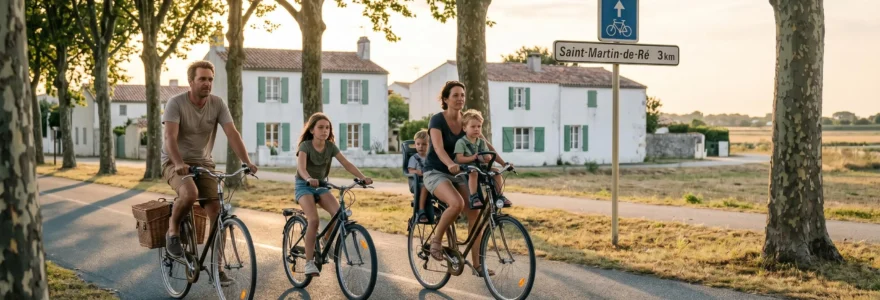
The mistake families repeatedly make when planning Île de Ré holidays is treating the island like a resort destination requiring packed itineraries. This 30-kilometre Atlantic outcrop operates on a different logic entirely: one shaped by tidal schedules, cycling infrastructure and the unhurried rhythms that villa-based holidays make possible.
Veteran Île de Ré visitors tend to describe their best days not as activity marathons, but as carefully paced cycles of beach windows, village exploration and villa retreat. What stands out in guest feedback is the relief families feel once they abandon the pressure to maximise every hour and instead align their days with the island’s natural tempo. The consensus among villa concierges is that the families who thrive here are those who plan selectively, build in retreat time and recognise that choosing the right villa location determines which activities remain feasible throughout a week-long stay.
This guide translates those patterns into actionable planning frameworks: how to match villa geography with cycling capabilities, when tides permit safe beach play, which freedoms the island’s car-free infrastructure unlocks for children, and how to pre-empt Atlantic weather shifts without anxiety.
Where island adventures begin: plotting your villa basecamp
Villa location on Île de Ré functions less as accommodation choice and more as strategic infrastructure decision. The island’s 10 villages cluster along a 30-kilometre spine, connected by 138 kilometres of dedicated cycle paths that form the backbone of family mobility. Northern villages (Ars-en-Ré, Les Portes-en-Ré) offer salt marsh landscapes and relative solitude; southern villages (Le Bois-Plage-en-Ré, La Couarde-sur-Mer) provide beach proximity and market density; central corridors near Saint-Martin-de-Ré become cycling hubs granting access to both.
The pattern that emerges from family travel forums is straightforward: villas chosen for aesthetic appeal alone frequently position families too far from daily necessities, turning simple bakery runs into logistical operations. Families discover too late that a charming stone cottage positioned 6 kilometres from the nearest village erodes daily enjoyment when young children lack the stamina for repeated long-distance cycling. Geographic suitability matters more than interior design when browsing Île de Ré rentals, ensuring cycling access remains pleasurable rather than a source of daily negotiation with exhausted children.
Cycling distances that appear modest on maps translate differently when accounting for child stamina and sibling age gaps. A villa situated 4 kilometres from the nearest village may suit confident 11-year-olds but exhausts under-sevens by day three, creating the friction experienced families work hard to avoid.
Cycling reach by age: realistic distances that preserve family harmony
Under-sevens typically manage 2-3 kilometres maximum one-way before fatigue dominates. Ages 8-10 can handle 5-6 kilometres with strategic rest stops, making Saint-Martin accessible from central villa zones. Confident cyclists aged 11 and above comfortably cover 8-10 kilometres, opening access to the island’s northern tip and Phare des Baleines.
Village distances deceive on maps: the round trip from Le Bois-Plage to Saint-Martin measures 12 kilometres, a distance that can separate enthusiastic morning departures from afternoon meltdowns.
Secure bike storage matters as much as cycling proximity. Villas lacking enclosed bike areas force families into daily rental negotiations or expose equipment to salt air corrosion. French legislation mandates helmets for children under 12 (enacted via décret n° 2016-1800 in December 2016), creating a non-negotiable equipment requirement that villa bike provisions must accommodate. Families planning stays can verify that helmet sizing, child seats (siège enfant) and trailer attachments (remorque) meet the specific age range travelling before arrival eliminates last-minute scrambling.
Tidal rhythms and the art of doing less
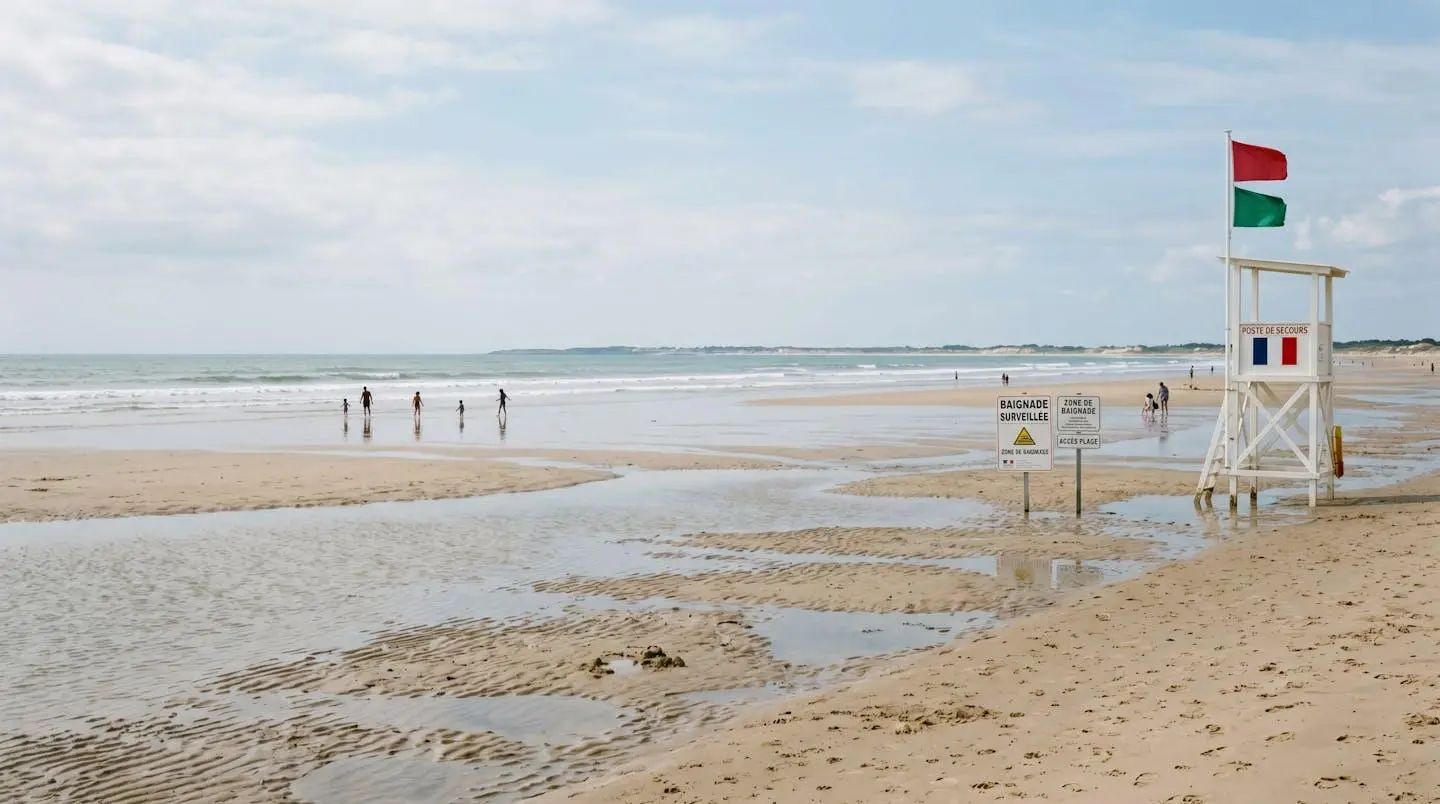
Atlantic tides impose a structure villa-based families learn to embrace rather than resist. Safe paddling windows extend approximately 2-3 hours either side of low tide, when the ocean retreats to reveal expansive shallow zones and the tidal pools that occupy young children for hours. High tide narrows beaches dramatically and deepens channels, making swimming less forgiving for hesitant swimmers.
The Atlantic coast’s generous tidal ranges create unique coastal beaches, revealing vast shallow zones perfect for young paddlers. Seasoned villa guests report that consulting local tide tables (available at tourist offices, bakeries and villa welcome packs) daily transforms beach timing from guesswork into precision. Families departing villas at 09:30 to align with mid-morning low tide avoid both the fierce midday sun and the crowded late-afternoon beach rush that dominates July and August.
What confounds first-time visitors is the cultural permission to retreat. The island operates on a split-day rhythm: intense morning activity (beach, cycling, village exploration) followed by villa-based downtime between 11:00 and 16:00, then a second, gentler outing as temperatures moderate. Families accustomed to maximising expensive hotel stays often carry guilt about mid-day villa hours, viewing retreat as wasted opportunity. The reality experienced families discover is the opposite: honouring siesta schedules and resting during peak heat prevents the exhaustion spirals that derail latter-half weeks.
-
Breakfast on villa terrace and beach departure timed with low tide -
Return to villa for lunch and siesta (non-negotiable for under-sevens, welcome retreat for all) -
Second outing: village exploration or alternative beach (energy restored, cooler temperatures) -
Evening market browsing or villa dinner preparation (relaxed social atmosphere) -
Optional sunset bike ride (flat light, cooler air, magical quality)
Supervised beaches (plages surveillées) operate with full lifeguard coverage throughout July and August, with reduced hours in June and September. The flag system follows standard French coastal protocols: green signals safe conditions, orange indicates caution (strong currents or jellyfish presence), red prohibits swimming entirely. Families with young or hesitant swimmers gain confidence from the visible supervision infrastructure that beaches like La Couarde-sur-Mer and Le Bois-Plage maintain during peak season.
Freedoms your children rarely encounter elsewhere
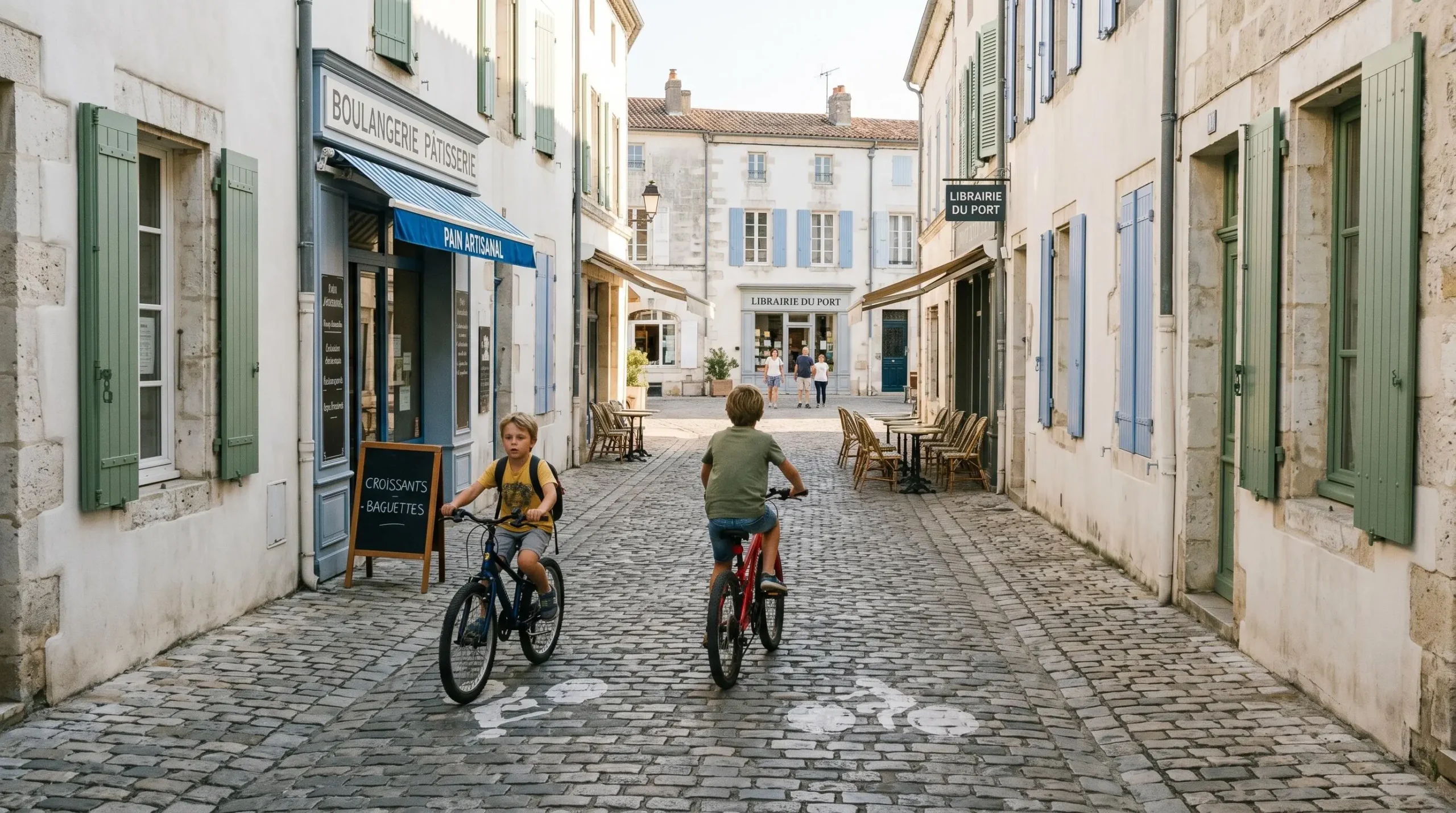
Île de Ré’s defining characteristic for families is not what it offers but what it removes: the vehicular traffic that constrains children’s movements in most UK environments. Car-free village cores, enclosed beach zones and a cycling network that segregates families from road traffic create a rare spatial autonomy. The question families wrestle with is not whether the infrastructure permits independence, but whether their own risk calibration allows them to grant it.
Local families gravitate toward a developmental framework that visiting families can adapt: confident seven-year-olds manage supervised village square play within visual range; nine-year-olds handle short bakery runs with a sibling; children aged 11 and above navigate independent beach time when parents remain on the same stretch of supervised shoreline. These calibrations depend entirely on individual child competence, route familiarity and parental comfort thresholds, but the island’s infrastructure makes options available that car-dominated suburbs rarely permit.
The pattern that emerges in guest feedback is developmental rather than purely recreational: children remember not the attractions visited but the autonomy granted. A morning bakery run executed independently, navigating village streets on a borrowed villa bike, purchasing croissants in hesitant French and returning triumphant creates a different holiday memory than passive sightseeing. According to official French road safety data, helmet use reduces the risk of serious head injury by 70%, making compliance with the under-12 law both legally required and practically protective when granting such freedoms.
Village evening markets (marchés nocturnes) operating throughout July and August across most villages provide social rehearsal grounds: children navigate stall browsing, small purchases and crowd negotiation in contained, pedestrianised environments. Parents accustomed to constant supervision often find the adjustment requires as much recalibration as children do, but the island’s small-village scale and visible community presence create conditions experienced families learn to trust.
When Atlantic clouds gather: your contingency vault
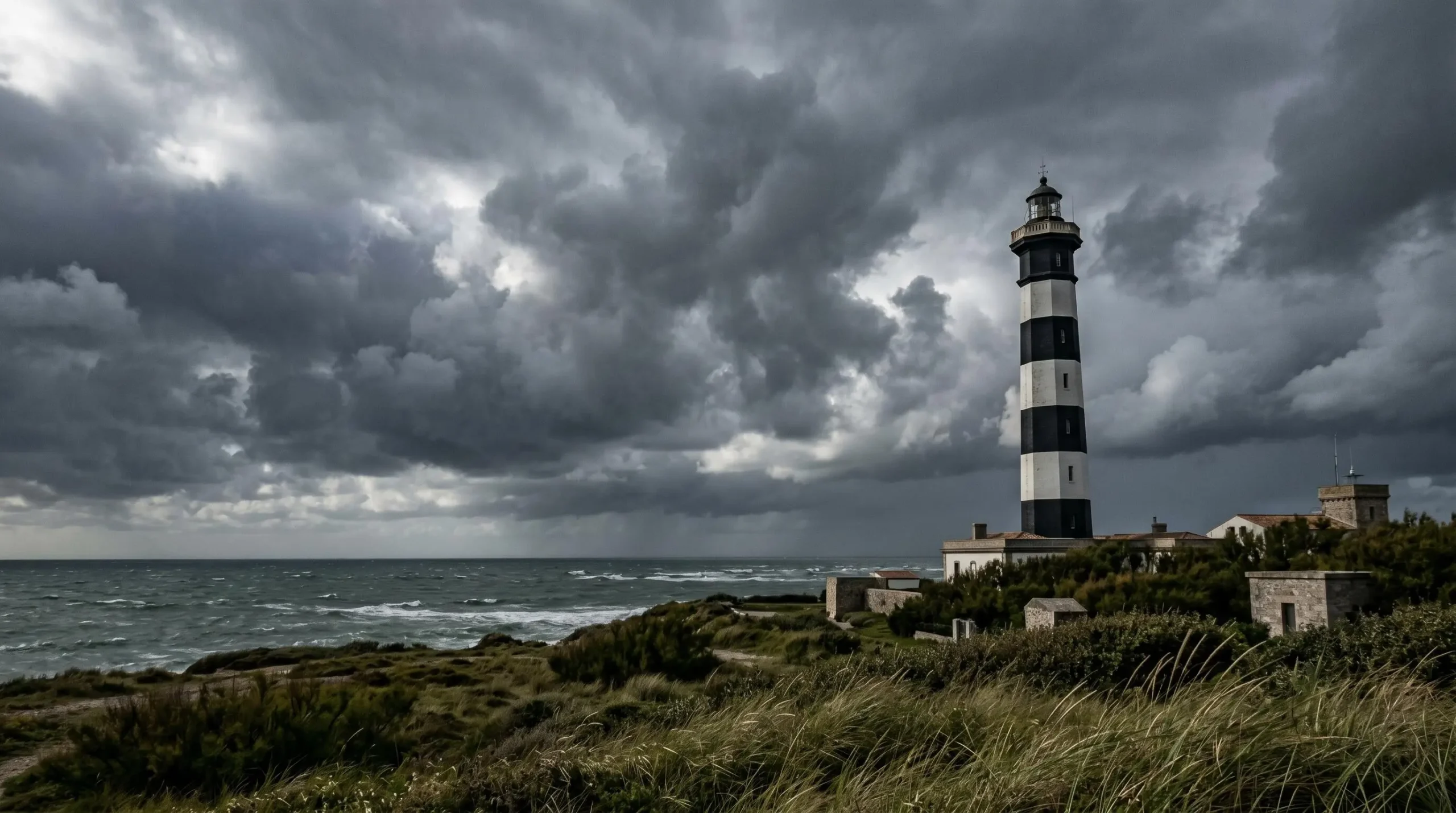
Atlantic weather operates on a different emotional register than Mediterranean predictability. Cloud systems gather with little warning; mornings promising sun can dissolve into grey afternoons. The anxiety this creates for villa-renting families centres less on rain itself and more on the perceived waste of expensive accommodation when outdoor activities become inaccessible. Shifting that perception requires pre-emptive planning rather than reactive scrambling.
La Rochelle Aquarium, located approximately 30 minutes’ drive across the bridge, functions as the primary indoor anchor for families with children aged 4-12. Pre-booking tickets online before departure eliminates queue anxiety and guarantees entry on days when every villa family simultaneously activates the same contingency plan. The Phare des Baleines at the island’s northern tip remains climbable in light rain (over 250 steps leading to panoramic views), though families should assess whether younger or height-sensitive children find the enclosed spiral staircase manageable.
What experienced villa guests emphasise is permission to treat rainy days as villa immersion rather than holiday failure: heated pools transform morning routines for older children, board games and cooking projects occupy afternoon hours, and the enforced retreat often provides the family downtime that busy schedules at home rarely permit.
- Pre-book La Rochelle Aquarium tickets online (skip queues, guarantee entry on rainy days)
- Pack one ‘villa day’ activity box (board games, craft supplies, baking ingredients)
- Research Phare des Baleines opening hours (lighthouse climb possible in light rain)
- Check villa pool heating availability (transforms rainy mornings for older children)
Village museums in Saint-Martin-de-Ré and La Flotte offer small maritime collections suitable for 60-90 minute visits, though families should calibrate expectations: these function as cultural diversions rather than full-day entertainments. The island’s covered market halls in major villages provide browsing opportunities that occupy late-morning hours when beach plans collapse.
Questions families ask before they arrive
Do villa bike rentals include child seats and helmets for a five-year-old?
Most Île de Ré villa agencies include basic Réthais bicycles, but child seats (siège enfant) and helmets require specific advance request. French law mandates helmets for under-12s (2017 legislation). If villa bikes lack appropriate child equipment, specialist hire shops in Saint-Martin and Le Bois-Plage offer seats, trailers and tag-alongs.
Can my 11-year-old cycle to the village bakery independently, or is that irresponsible?
Île de Ré’s car-free pistes cyclables and small village scale make independent bakery runs feasible for confident 10-11 year-olds, unlike UK suburban environments. Assess your child’s cycling competence and the specific villa-to-village route (ideally under 2 kilometres on dedicated path). Trial the route together first, establish clear boundaries (which streets permitted, mobile contact expected) and leverage the island’s safety infrastructure that local families trust.
What’s the realistic latest we can leave the beach before tides become unsafe for young children?
Atlantic tides on Île de Ré follow a twice-daily cycle; safe paddling windows extend approximately 2-3 hours either side of low tide. Consult local tide tables (available at tourist offices, bakeries, villa welcome packs) daily. When tide advances, channels deepen rapidly and currents strengthen. Supervised beaches (plages surveillées) display flag warnings; always defer to lifeguard guidance during July and August when supervision operates.
If we rent a villa with a private pool, are we wasting it by going out to beaches and activities?
Villa pools serve distinct purposes across the day: mid-morning beach departure aligns with optimal low-tide windows, while 14:00-16:00 pool time accommodates younger children’s nap schedules and fierce afternoon sun. Pools transform rainy mornings and provide evening relaxation after cycling. The split rhythm (beach mornings, villa afternoons, village evenings) prevents child exhaustion and justifies premium villa investment through flexible days impossible in hotel settings.
The families who extract the most value from Île de Ré villa holidays are rarely those who plan the most activities. They are the ones who recognise that villa location determines cycling feasibility, that tidal schedules dictate beach windows more reliably than weather forecasts, and that granting age-appropriate independence creates developmental experiences standard resort holidays cannot replicate.
Pre-departure preparation matters more than spontaneity: verifying bike equipment, pre-booking aquarium tickets, downloading tide tables and stocking a rainy-day activity box eliminates the reactive scrambling that exhausts families by mid-week. The island rewards selective planning over comprehensive itineraries, honouring retreat time over activity maximisation, and trusting the infrastructure that makes car-free family mobility not just possible but pleasurable.
Your next step is calibrating villa geography against your specific family’s cycling capabilities and deciding whether to embrace the split-day rhythm that tides and siesta culture impose, or to resist it and risk the exhaustion patterns that forum discussions consistently document.